Built for mixed infections
This page is for Windows machines with several symptoms at once: trojans, spyware, adware, browser abuse, loaders, droppers, and potentially unwanted software.

Use Gridinsoft as a malware removal tool for Windows to inspect mixed infections, including trojans, spyware, adware, ransomware, droppers, and other unwanted programs. Review detections, quarantine risky items, and confirm cleanup.
Real Windows infections rarely arrive as one clean category. A user opens a fake installer, “free” utility, browser update, or phishing attachment and ends up with several overlapping problems: adware, spyware, trojans, droppers, hijacked browser settings, and scheduled tasks that survive reboot.
This page is for that mixed-infection reality. If the case looks more like one isolated virus problem, use our virus remover workflow. If the issue is mostly hidden monitoring or browser theft, use Spyware Remover instead.
This page is for Windows machines with several symptoms at once: trojans, spyware, adware, browser abuse, loaders, droppers, and potentially unwanted software.
The point is not only to remove one alert. It is to verify startup entries, browser add-ons, scheduled tasks, scripts, temp files, and leftover payloads after the first cleanup.
If the PC shows several suspicious signs together, a malware-removal workflow is stronger than treating each symptom as a separate problem.
These combinations usually mean the incident is broader than one simple virus alert and needs a proper Windows cleanup pass.
The page is meant for cleanup decisions users and admins actually face, not generic security marketing.
One download introduced several problems at once: background processes, browser redirects, scheduled tasks, and suspicious extensions.
The user reports pop-ups, password resets, blocked security settings, new startup entries, and performance drops after opening one file.
A visible trojan or adware item was removed, but you still need to check whether spyware, droppers, or persistence items remain.
The problem is not limited to one malicious tab or extension. The system also shows tasks, scripts, services, or temp-path executables.
Use one repeatable path that checks the whole compromise chain instead of chasing one pop-up, one process, or one browser symptom at a time.
Review running processes, startup entries, scheduled tasks, browser extensions, temp folders, and user-profile paths before the machine is declared clean.
Treat the case as one compromise chain. A trojan, browser hijacker, spyware component, and PUP often come from the same installer or loader.
When a detection needs a second look, isolating it first is safer than deleting evidence too early or leaving the payload active on the endpoint.
After the first removal, run follow-up checks so that leftover scripts, persistence hooks, or browser artifacts do not recreate the infection later.
Use the workflow that matches what is actually happening on the endpoint.
When the Windows endpoint shows several infection symptoms together and you need one cleanup workflow for the whole compromise chain.
When the case looks more like one classic virus incident than a mixed compromise with spyware, adware, and browser abuse.
Open virus remover workflowWhen the dominant issue is hidden monitoring, browser session theft, keylogger-like behavior, or other privacy-focused spyware symptoms.
Open spyware remover workflowCure your PC from any kind of malware
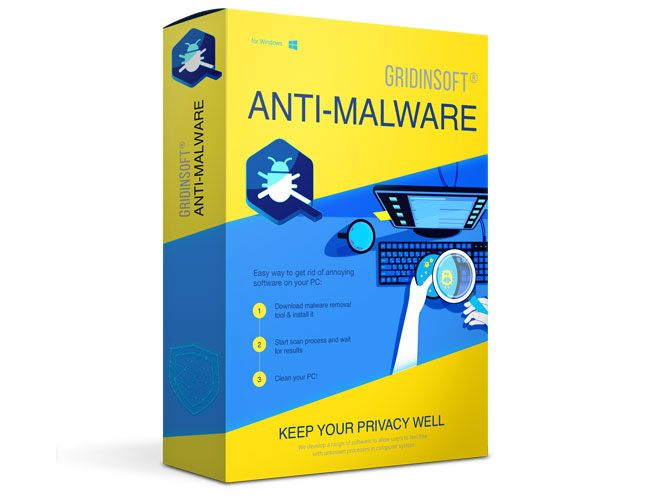
Our Malware Removal Tool detects, removes, and prevents malware. Protect your computer today with Gridinsoft Anti-malware.
We've packed the world's largest threat-detection network and machine-learning malware protection into a single, lightweight malware scan and removal tool that won't slow down your PC.
Download and install Gridinsoft Anti-malware. Then, click the “Standard Scan” button, and the virus detector engine quickly scans for malware.
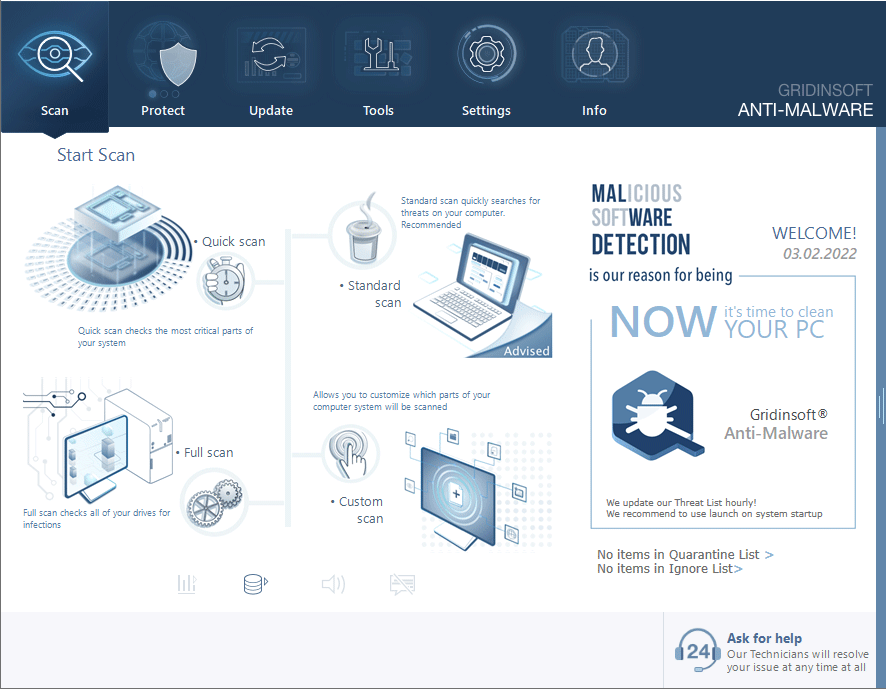
After the malware scan, Gridinsoft reports on any threats found and asks you to remove them.
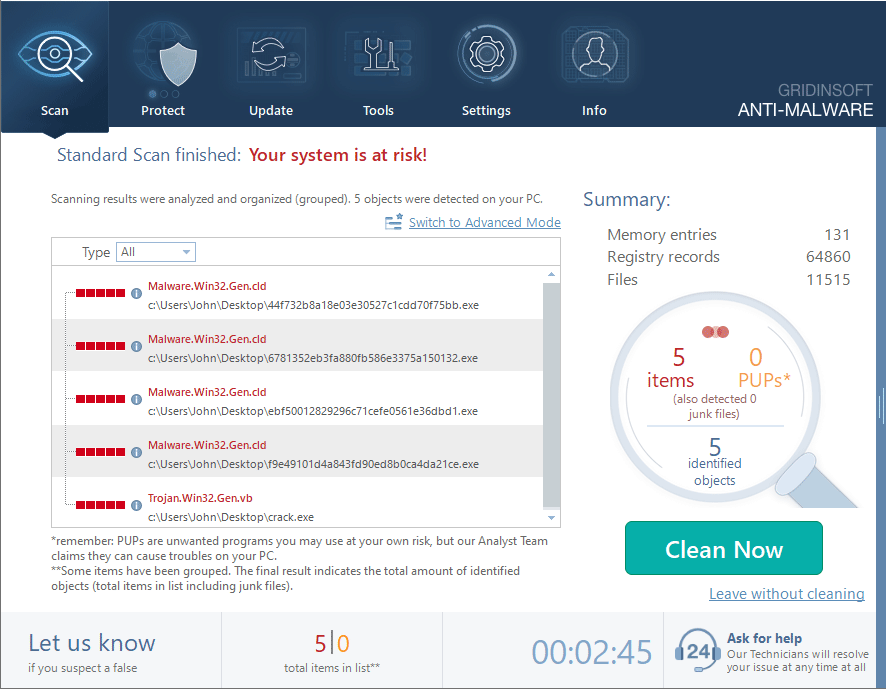
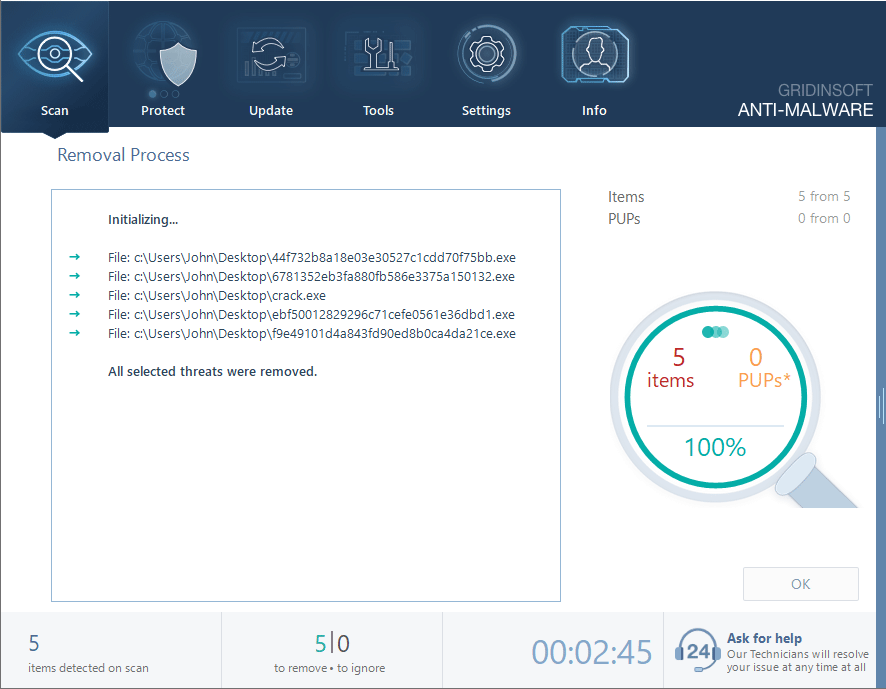
Once you click the "Clean Now", our antivirus tool will clean up found malware and threats, so your computer is secure and safe.
OPSWAT, one of the most reputable organizations opposed to the invasion of malicious software, awarded our product with a Gold certificate.
We are proud of this result and will stay on our principles to allow each user to keep his privacy.
Review mixed detections in one place, quarantine risky items safely, and verify that the Windows endpoint is actually clean after the first pass.
Malware cleanup is usually a chain problem, not a single-file problem. One compromised installer can leave adware, spyware, browser abuse, droppers, and persistence behind even after the obvious payload is removed.
Gridinsoft Anti-Malware gives you a Windows workflow that helps inspect the whole chain instead of guessing which symptom matters most.
Gridinsoft is a very nice antivirus program. It's easy to install and cleans great.
Gridinsoft Anti-Malware I have been using this software for years. I think it is an excellent security software. It completely cleans every corner of the computer from malware, if any.
Great program with easy interface. Got my system clean in a single scan. Had a bit of an issue with activation, their support get is sorted out in a matter of minutes. 5 starts, plain and simple
I have exchanged several emails with their technical support. They always answered even though sometimes it lasted two days and finally they solved my problem and I mangaed to get rid of the malware causing problems on my comp.