Best for early ransomware signals
Use this workflow when scripts, loaders, or Office documents begin touching large numbers of files, changing extensions, or creating suspicious encrypted copies.

Gridinsoft Anti-Ransomware for Windows helps detect ransomware-like behavior, inspect suspicious encryption events, quarantine dangerous files, and protect documents before a full incident spreads.
Anti-ransomware is not only about dealing with encrypted files after the damage is visible. The more valuable use case is earlier in the chain: phishing attachments, fake invoices, macro documents, JavaScript droppers, remote access abuse, and suspicious PowerShell activity that appears just before mass encryption starts.
This page is built for that response moment. If you are studying ransomware families and campaigns, continue with our ransomware guide. If the endpoint shows a broader compromise beyond ransomware staging, move to the malware removal workflow.
Use this workflow when scripts, loaders, or Office documents begin touching large numbers of files, changing extensions, or creating suspicious encrypted copies.
The correct first move is usually to isolate the process, quarantine the payload, and stop the activity before the infection turns into a full encryption incident.
This page is for Windows desktops and laptops that need a practical anti-ransomware workflow, not a generic explanation of ransomware headlines.
These are the patterns that matter before files are fully lost. The point is to catch the staging phase, isolate the payload, and confirm whether the endpoint still has an active encryptor or a loader waiting to relaunch.
These are practical Windows scenarios where a ransomware-specific response path is stronger than generic “run an antivirus” advice.
A suspicious invoice, resume, shipping notice, or archive file launched a script, macro, or loader and Windows started behaving abnormally.
Documents are being renamed, file extensions are changing, shadow copies are touched, or a user profile is suddenly full of encrypted duplicates.
A compromised RDP session, remote tool, or stolen admin credential may have been used to stage ransomware on a Windows endpoint.
The obvious payload was stopped, but you still need to verify loaders, scheduled tasks, scripts, or startup items are not waiting to relaunch.
Containment matters more than speed clicks. The response should preserve stability while stopping encryption and exposing the actual launch chain.
Review the suspicious document, archive, script, temporary executable, PowerShell command, or remote session that triggered abnormal file activity.
Isolate the main file together with startup entries, scheduled tasks, script files, or download locations that could reactivate the same attack chain.
Look for task scheduler abuse, service changes, script hosts, temp folders, and credentials that could allow the attacker to resume the incident later.
After containment, verify that no additional trojans, droppers, spyware, or stealers remain on the endpoint before you treat the system as clean.
Not every suspicious Windows event belongs on the same page. Use the page that matches the dominant symptom.
When the main concern is encryption behavior, suspicious document execution, or a possible ransomware staging phase on Windows.
When the machine shows broader mixed-infection signs such as spyware, adware, trojans, browser abuse, and ransomware-related activity together.
Open malware removal workflowWhen you are researching families, extortion tactics, recent campaigns, or the business impact of ransomware rather than cleaning a Windows endpoint.
Read the ransomware guideCure your PC from any kind of ransomware
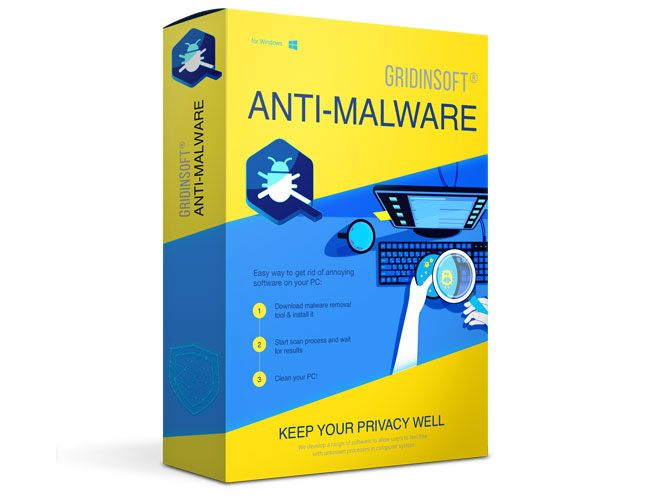
Our Anti-Ransomware detects, removes, and prevents ransomware. Protect your computer today with Gridinsoft Anti-malware.
We've packed the world's largest threat-detection network and machine-learning malware protection into a single, lightweight ransomware scan and removal tool that won't slow down your PC.
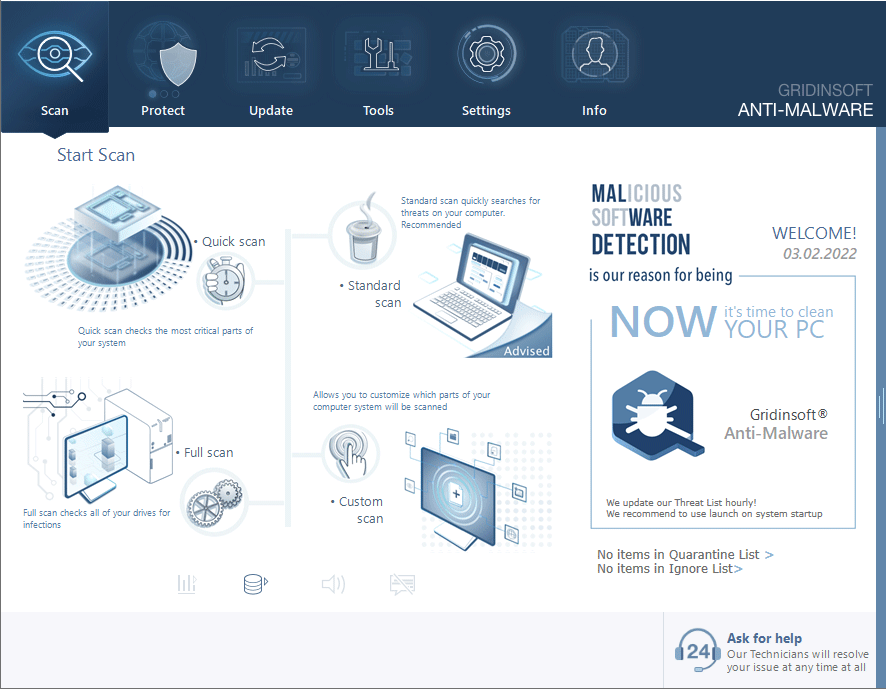
Download and install Gridinsoft Anti-malware. Then, click the “Standard Scan” button, and the virus detector engine quickly scans for ransomware.
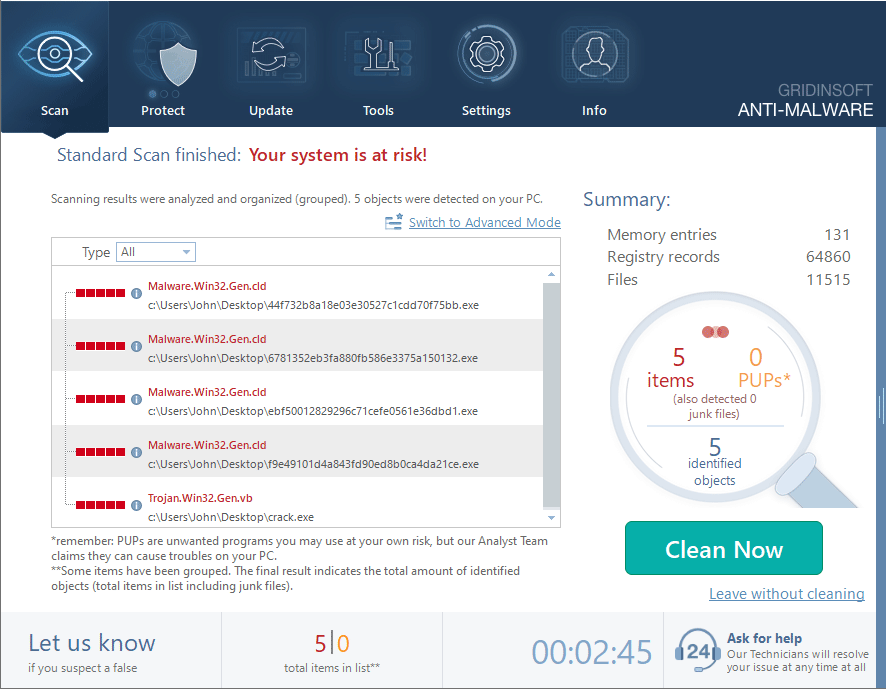
After the malware scan, Gridinsoft reports on any threats found and asks you to remove them.
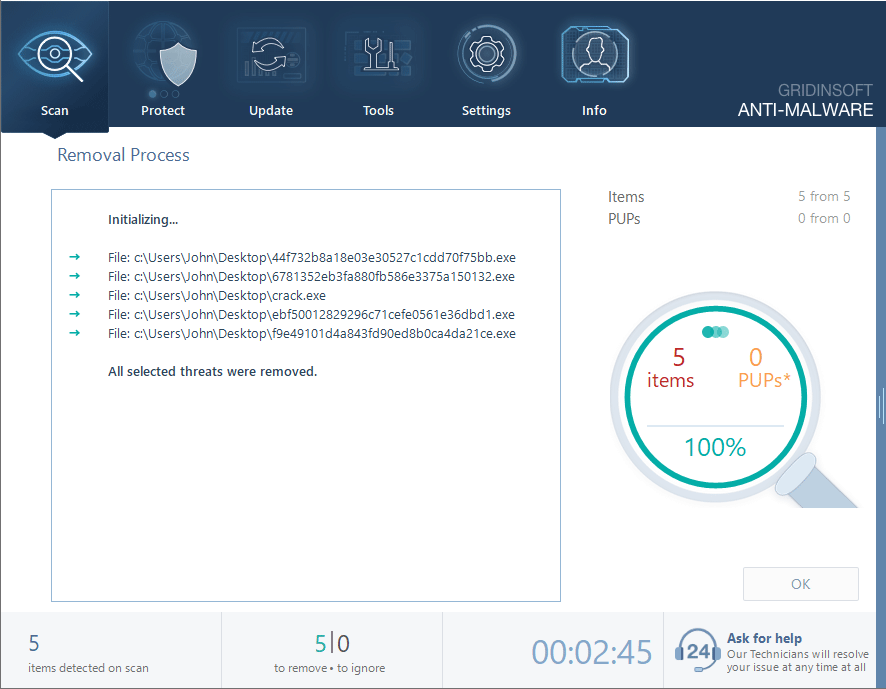
Once you click the "Clean Now", our antivirus tool will clean up found ransomware and threats, so your computer is secure and safe.
OPSWAT, one of the most reputable organizations opposed to the invasion of malicious software, awarded our product with a Gold certificate.
We are proud of this result and will stay on our principles to allow each user to keep his privacy.
Contain suspicious encryption behavior, quarantine risky payloads, and verify that Windows is clean before the user resumes work.
Ransomware rarely arrives as a clearly labeled payload. It is more often packaged as a phishing attachment, fake update, script launcher, loader, or remote-access event that only looks suspicious in hindsight.
Gridinsoft Anti-Malware gives you a Windows response workflow that focuses on inspection, quarantine, persistence review, and follow-up verification instead of relying on generic antivirus claims.
Gridinsoft is a very nice antivirus program. It's easy to install and cleans great.
Gridinsoft Anti-Malware I have been using this software for years. I think it is an excellent security software. It completely cleans every corner of the computer from malware, if any.
Great program with easy interface. Got my system clean in a single scan. Had a bit of an issue with activation, their support get is sorted out in a matter of minutes. 5 starts, plain and simple
I have exchanged several emails with their technical support. They always answered even though sometimes it lasted two days and finally they solved my problem and I mangaed to get rid of the malware causing problems on my comp.